An avid reader and gamer, Todd picked up his habit for the latter with TSR's Marvel Super Heroes. Since opening that box set, he has ran hundreds of games, co-owned and operated a game store way too huge for his hometown to manage, earned a degree, and contributed writings to Abstract Nova and Eden Studios.
At this time, he works a day job between meaningful freelance assignments. He's more than likely checking his e-mail right this very second.
He currently lives in Bowling Green, Kentucky with his wife, son, daughter, and possibly the least graceful cat in the Western Hemisphere.
Author | spikexan
Primeval RPG Review
Posted on October 9, 2012 by spikexan
 Primeval is a new licensed setting from Cubicle 7 Entertainment that uses the same engine as their Doctor Who line of games. For those unclear about the television show, it centers around a group of people who investigate anomalies, which are rips that permit treacherous travel between points in time. The primary focus for the setting are anomalies that stretch back to prehistoric times, as they are the most common. The rips actually can go to anywhen though, opening up quite a bit of sandbox for a game, which is really what this review is about.
[...more]
Trail of Cthulhu: The Book of the Smoke Review
Posted on September 7, 2012 by spikexan
 The Book of the Smoke is an oddity. The intentional use would be as an in-game prop for any setting where an occult London would be researched; however, it is best suited for Trail of Cthulhu, particularly the Bookhounds of London (a great read, by the way).
My initial impression of the book was lackluster. The cover is not eye-catching and doesn’t look right for a book from the intended era. The artwork, maps, and photography inside do seem to belong with such a tome though. The layout (single column) strikes the look of a journal. While the end result is fitting, it still proves dull upon examination.
[...more]
Hell on Earth: Reloaded Review
Posted on September 4, 2012 by spikexan
 I have to make a confession: I’m not overly familiar with the original Hell on Earth setting. A friend who had both it and Deadlands offered our gaming group at the time the promise of a storyline that would stretch from characters in Deadlands all the way to the far flung future of Hell on Earth. We never made it to the second-tier of his story; other games came a’knockin’. That said, I had a faint overview of the setting, strong familiarity with the system, and powerful motivation for the revised material.
Hell on Earth (HoE from now on) is a large (209 pages) full-color bear with tons o’ teeth.
[...more]
RMS Titanic: The Millionaires Special RPG Review
Posted on June 25, 2012 by spikexan
 Here’s a fun idea: Take a tried and true Cthluhu story of brave investigators stopping a mad cultist achieve his evil designs. Players have to contend with Sanity checks, grave danger, and, most likely, the rise of something that must be promptly put back down. Then, set the whole thing on the Titanic.
That’s the real beauty of this adventure, a little fiction laced throughout some tragic fact. I’ve always been a fan of that, which makes the recent emergence of the, for lack of better word, genre a hit with me.
The artwork of the adventure (25 pages, no ads) is sparse and mostly photographs from the era. I usually like art spicing up my text, but it’s really not an issue here. There is more than enough material to keep the reader interested.
[...more]
DC Adventures: Heroes and Villains Volume 1 Review
Posted on June 22, 2012 by spikexan
 The first thing you have to ask yourself is where this game fits on a horror-themed website. It’s a fair question, no doubt. There are two specific ways that come to my mind. First, the game uses the Mutants and Masterminds D20 variant. This means that, with a little work, you could have a group of dungeon-crawling adventurers stumble upon a cult as they summoned forth their deity-infused messiah (with Black Adam stats) or a vicious demon (with Etrigan stats). I’ll be the first to admit that those two options are a bit on the overkill side, but horror sometimes works out that way. Secondly, this volume includes tons of entries for a horror-based supers game.
[...more]
Designers and Dragons Review
Posted on June 18, 2012 by spikexan
 Let’s say you’re going to teach a course on the history of role-playing games. You have the diploma and teaching certification. You have the tweed jacket. You have everything, but a textbook. With Designers and Dragons, you have a hulking 442 page textbook that examines this specific gaming culture since its creation in 1974. You’re ready to teach.
I’ve been playing RPGs since 1987 put TSR’s Marvel Super Heroes: Advanced Set into my local Waldenbooks, which means, according to this book, that I missed a massive amount of gaming history. I’ve played lots of games, read lots more that were not worth playing, and read about tons more through reviews or blurbs. I know a bit about what is going on in the industry.
[...more]
Investigator Weapons: Volume One (Call of Cthulhu) Review
Posted on May 22, 2012 by spikexan
 When I first got this assignment, I was underwhelmed. Why on Earth would I care about guns from a century ago? I’m not the manliest guy in my gaming group. I zone out when people start talking weapons and cars. Tell me you’re shooting at the red convertible with your rifle and I’m good. I know for the Purists out there that is a lot more to it than that, but that’s your game, not mine. I’ll research a little out of love for my gamers, but I’ll be researching the occult side of the horror game quite a bit more.
I mention all of this because this book seemed to be akin to the ultra-horrible World of Darkness: Combat book or some lame D&D PDF for an arrowhead. As much as my ego forbids me to say this, I will: I was wrong about this book.
[...more]
Deadlands: The Last Sons RPG Review
Posted on May 4, 2012 by spikexan
 Pinnacle Entertainment brings Deadlands’ fans a monster tome (337 pages/no ads) that focuses on fleshing out Native American characters. There is also a bit of metaplot going on with Raven and his schemes. Coupled with the apparent removal of a major threat, the book has a very “new” feel to it, similar to what Shadowrun captures with its constant updating calendar.
Despite its size, the book is truly a supplement, a gorgeous supplement loaded with all the bells and whistles one expects from a corebook. The layout follows the Deadlands format by starting with fourteen pages of the Disputed Lands edition of the Tombstone Epitaph.
[...more]
A Review of Two Savage RPGs
Posted on January 9, 2012 by spikexan
 Review: A Tale of Two Savages
Agents of Oblivion and Peculiar Pentad
It’s no secret I’m a fan of horror RPGs and Savage Worlds, which makes these two entries especially appealing. Agents of Oblivion suggests a world where Jason Bourne gets put into a blender with HP Lovecraft and turns out rather interesting results. With the Savaged version of Peculiar Pentad, readers are given five entrepreneurs who have uncovered a troublesome niche market–those seeking items attached to the Cthulhu Mythos. I’m thinking a 401K isn’t a worthwhile investment.
[...more]
Todd’s 2011 RPG Shopping List
Posted on November 25, 2011 by spikexan
Flames Rising game reviewer Todd Cash has some suggestions for those looks to buy RPGs as a gift (or even pick up a little something for themselves). Most of these are items he has reviewed this year, so we’re going to link back to those reviews so readers can find more in-depth information if they wish.
Buying for Your Favorite Gamer 2011
It’s that time of the year again. Everyone’s wish lists are being compiled while retail stores scramble to offer the same crap they did last year only without making it seem that way.
[...more]
Vampire Retrospective: Todd Cash
Posted on November 17, 2011 by spikexan
 The Vampire Retrospective Project continues today with an essay from Todd Cash, one of the more prolific RPG reviewers here at Flames Rising. Todd tells us about his first experiences with Vampire, moving on to other games and now looking to start up some old characters once more.
I wouldn’t be gaming today if Vampire the Masquerade failed to exist. It sounds more melodramatic than the situation really is. I started gaming in 1987 with TSR’s Marvel Super Heroes and Top Secret. I loved comics and horror movies, wanted to be the heroes I read about, and found that outlet through gaming. While there were great horror games on the market, my exposure to them was limited (they didn’t advertise in comic books and Waldenbooks didn’t carry them).
[...more]
Ashen Stars RPG Review
Posted on November 14, 2011 by spikexan
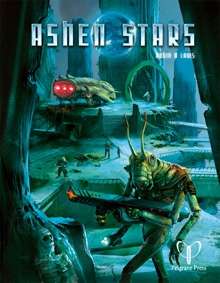 The Gumshoe mechanic gets tested on a new genre: sci-fi. In Ashen Stars, players enter the Bleed where they play Lasers, law enforcement of sorts. This heavy (305 pages) book is a stand-alone game that fully details Law’s sci-fi setting and delivers the Gumshoe rules. I have enjoyed the previous Gumshoe setting, particularly Mutant City Blues and Esoterrorists, so I was intrigued to see what the future held.
The layout and artwork of the book holds the same feel as Trail of Cthulhu and MCB. Bordering is neat, but doesn’t attract much attention. Sidebars are tight. The artwork has more hits than misses, though nothing really stands out as excellent. One thing I do like is the full color splurge on the book. It makes reading a volume of this size all the more pleasurable.
[...more]
Totems of the Dead RPG Review
Posted on November 11, 2011 by spikexan
 This ambitious Savage Worlds setting mixes Norse and Pre-Columbian Native American lore into a sword and sorcery setting I find damn interesting. First, the artwork and layout of the book is an outstanding mix of watermarked images, detailed artwork, and fresh creativity. I’d love to see this book in color, which is really my only complaint about the book. Consider me spoiled.
There are few times that a supplement supersedes the production value of its core work. This is one of those times. The artwork of this book easily bests the majority of Savage Worlds releases, including the core book. The writing is excellent, providing a rich background for players to explore.
[...more]
The Unspeakable Oath 20 Review
Posted on November 7, 2011 by spikexan
 Anthologies like The Unspeakable Oath are a mixed bag. Dragon, Dungeon, White Wolf Magazine, Eden Studios Presents, and others are testament to this. Sometimes a great collection of talent can make the uninteresting (to me) fascinating. The other is likewise true. No particular title is safe. You have to take each edition as a singular creature.
First off, I find that the included art to #20 is top notch, particularly the cover artwork by Todd Shearer. The interior illustrators offered a surprising volume of artwork to the collection. The layout ranged from the scribbled nonsense (fine for the subject matter) to smooth looking black bars. Some ads are scattered throughout the book, even put into the columns of articles. It’s a smooth fit.
There is a terrific amount of material in this installment, much of which is aimed at Delta Green (fine by me).
[...more]
Vampire the Masquerade 20th Anniversary Edition Review
Posted on November 3, 2011 by spikexan
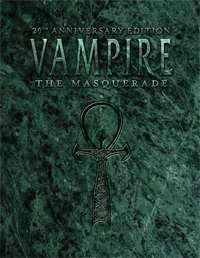 Where has the time gone? Knowing this game has been out for twenty years seems wrong to me. There are gamers in my group who were ONE when I was thumbing through my
first copy of the original edition. Wrong, so wrong! Rather than share my Vampire recollection here, I’ll instead talk about this massive (529 pages) winner of the (I assume) 2012 Origins award.
One aspect to the book that is unchanged is it’s layout. The book looks identical to the 2nd release in terms of fonts and structure. Mixed with art both new and old, this makes for a strong sense of nostalgia. The look of the book–fenced in borders, eye-catching headers, and more–was excellent twenty years ago and has aged well. If anything, they have enriched it by adding much-needed color to the mix.
[...more]
Alice and Dorothy Fiction Review
Posted on September 28, 2011 by spikexan
 I’m a huge fan of The Wizard of Oz. I’m old enough to remember CBS playing it annually; therefore, I watched it annually. I’m eager to see new tales set in Oz (though I’m generally let down), so the chance to review this book promised a fresh look. The blurb on the back of this book promises an insane Alice (in Wonderland) and Dorothy (Wizard of Oz) being tracked by something fantastically evil while they search for a tornado . . . they can use to escape Earth. It was exactly the kind of American Gods read I was looking for, so the question becomes this: Did the book live up to my own hype for it?
I found that Schnarr’s writing is a relatively fresh style. He doesn’t often show his writing roots in his own words. Schnarr’s story contains an excellent mix of the surreal.
[...more]
Savage Worlds Deluxe RPG Review
Posted on September 22, 2011 by spikexan
 Let me first confess how much I love Savage Worlds. I’ve been a huge fan of the mechanics from my first game (the Tour of Darkness setting) where I learned how deadly tossing grenades back at my opponents could be. What I love about the system is how malleable it is. With a few tweaks, you can lay out a 1940s pulp setting or a star-flung sci-fi one. There have been numerous releases for the engine over the years, giving players and game masters a wealth of material to mine. This release isn’t “new” as much as it is dressed in its Sunday Best. I’m going to focus on the changes for the purposes of this review rather than detail the entire work.
The lavish artwork is generous throughout the book. Since the engine is designed for players to play damn near anything, the artwork is varied. There are multiple excellent action pieces and the character pieces have more hits than misses (I liked 34, 57, and 70 the best). Much of the artwork is borrowed from other Savage Worlds’ releases either as a direct or inspired work.
[...more]
Wicked Heroes: Children of the Mirror RPG Review
Posted on September 5, 2011 by spikexan
Wicked Heroes is the latest in John Wick’s Little Games line. In this RPG, players take on the roles of damned super heroes rather than the typical spandex fare. While the game may claim to be “little” this setting could be fleshed out so much more. It could easily be as meaty as Houses of the Blooded.
I’m not going to focus on the artwork of a 16 page RPG, because, well, the art isn’t there. There is no reason it should be. I will take a second to talk about the covers though. I hate them. Solid. Black. Covers. Really? Yes, A printed copy of a book (little or not) needs a cover and these covers could be much friendlier. When the final project comes out, does it means each chapter will start with these blackened pages?
The story itself is interesting. The gist of it can be found on the items blurb at RPGNow.com, so I won’t expand it.
[...more]
Trail of Cthulhu: The Rending Box Review
Posted on August 25, 2011 by spikexan
 Graham Walmsley’s The Rending Box is moderate-sized (30 pages with handouts) adventure for Trail of Cthulhu (though it could be modified for Call of Cthulhu with little hassle). While it isn’t an overly challenging adventure, it perhaps puts too much potence into the hands (literally) of the players. Characters will find that Pandora had it easy with her little box.
Huguenin’s artwork is appropriately gruesome for this chapter of the three-scenario Purist adventure. His cover piece is atmospheric while his interior works, such as the lovely Jakob Tulving removing his eyes so that he can see better looks like something from a 1950s pre-code horror comic book cover (that’s a compliment for those who don’t know me). I also love the detailed image of the box itself (a great handout to toss on the table before declaring “this is what will ruin your lives).
[...more]
Do: Pilgrims of the Flying Temple RPG Review
Posted on August 10, 2011 by spikexan
 Daniel Solis’ Do: Pilgrims of the Flying Temple is a different type of game for me to review. It’s not the kind of game I would pick up on my own. This isn’t to say I am against indie games because, well, I have dozens of examples to the contrary. No, the genre just isn’t that interesting to me and I know my gaming group mostly wouldn’t get behind the concept.
With that said, the book really won me over (can’t make a claim to my gaming group though). There are three key elements to this clever game that make it intriguing and full of potential for gamers and, more importantly, young gamers. We’ll go over those elements (maybe two more) and I’ll show you why this is exactly the kind of game I’d play with my son (he’s seven or, as he’s say, seven and a half).
The idea of a wandering pilgrim is attractive even when laced in an anime dressing (not my thing).
[...more]
Email Newsletter Sign Up
11 Tales of Ghostly Horror
Reviews Wanted!
The Devil’s Night WoD SAS