Want to read a horror review before you buy? Read over 225 full-length reviews of books, games, DVDs, music and more from Flames Rising horror and dark fantasy!
Burning Wheel Fantasy Roleplaying System (BW) isn’t like other RPGs. Yes, that first sentence is maddening; “What is BW like, then?!” you shout, frustrated. Let me sum up…
First off, Burning Wheel is a story-driven game. Kept simple, the rules are astonishingly playable, with sample-of-play threads written throughout the main book and the supplements that remind the GM and the players that they are sharing a story that they tell together. The entire point is to be fun; well, isn’t that the point of hobbies?
From the bright towns and darkened wilderness they come: mighty heroes intent on exploring dungeons, slaying monsters and battling evil.
The Player’s Handbook 2 offers Dungeons & Dragons players new options with new Races, Classes and more. This book introduces the primal power source, which draws on the spirits that preserve and sustain the world. Wizards of the Coast has offered up a handful of previews and excerpts on the Dungeons & Dragons website and a few lucky gamers out there have already received their pre-ordered copies of the book (some have even posted spoiler threads if you have the energy to dig through them).
Flames Rising was lucky enough to get an advance copy of the book for review and we are teaming up with a handful of other websites to explore some of the new options being made available to players of Dungeons & Dragons. Specifically we are going to be taking a look at the Shaman Class today. After our Look at the Shaman you will find a series of links to other sites examining other sections of the book.
Mississinewa Miniatures is a little-known miniatures company from Indiana. Specializing in Zombie-themed figures, they have an impressive selection, if not a broad range – yet. Mississinewa sent Flames Rising a generous selection of figures to review. Sadly, I can’t do justice to them all so I’m going to concentrate on what they do best: Zombies!
The zombie line is reasonably well- fleshed out; 18 different models shamble their way to your gaming table, and while the variety isn’t truly spectacular, it’s solid. The first six are all naked zombies. Before you get too excited, let me first point out that there are no naughty bits in evidence; they’re more like zombie mannequins than anything else.
In 1986-87 Alan Moore and Dave Gibbons created a twelve part comic book series called Watchmen that was released by DC Comics. The series garnered immediate critical praise and sales success. These twelve issues were quickly reprinted together and released as the first graphic novel. Much like the super heroes by which it was inspired, Watchmen slammed through the boundaries of what comic books were thought to be, redefining the form and permanently changing the ambitions of the comic book industry.
After years of starts and stops Watchmen has finally found its way to the big screen. Directed by Zack Snyder (300, Dawn of the Dead remake) and starring Malin Akerman, Billy Crudup, Jackie Earle Haley, and Patrick Wilson, the film version adheres to the book much more closely than I thought possible. And as crazy as this may sound, I’m not convinced that’s an entirely good thing.
API Worldwide Canada is Third Eye Games second release, a supplement to the Apocalypse Prevention, Inc corebook. In this 82 page book (three pages of ads), the authors lay out the specifics of the Canadian branch, specific threats to its agents (both environmental and supernatural), and some of the tools and spells fitting to this setting. The book concludes with a duo of adventures for players eager to jump right into the game. The artwork in this supplement consisted of fifteen pieces of art, two of which were maps. The art within the book ranged a bit in style; nevertheless, I found that all the pieces fit the story behind this book.
Calliope Reaper-Jones is a fashionista living in New York who has all but forgotten about her family. Purposefully. She’s distanced herself from her strange family — who just happens to run Death, Incorporated. When her memory charm breaks, her heritage comes rushing back to her and she learns her father and the Board of Directors has been kidnapped. Grudgingly, she agrees to take on the job of Death but quickly finds out she has to complete three tasks first to prove her worth.
Even though Death’s Daughter fits squarely in the genre of urban fantasy, I felt that the book had a lot of elements of dark comedy to it.
So to be perfectly honest, I’ve been going back and forth on whether on not I actually wanted to write this review. It basically came down to ‘not burning bridges’ in a very small universe, or being honest with my readers. (I know, all three of you.)
When I weighted it out, I decided a bad review treated fairly and note based on gut reaction might be better for the internet as a whole then a blank space. Plus, that way, as new readers show up, (I’ll welcome you, reader number four,) they can feel secure that I’m reviewing for honesty and not just for links.
George Romero’s Diary of the Dead (2007) is a lot like Jell-o to my cinematic palette; that’s to say there’s always room for more zombie flicks from the man who invented them.
Diary tells the tale of a group of film students and their professor from the University of Pittsburg as they shoot a “mummy” movie in rural Pennsylvania. Meanwhile, a zombie plague breaks out, quickly spreading around the world. The cadre of survivors packs up their film equipment and hits the road in search of sanctuary from the pending apocalypse. They soon turn their equipment toward the unfolding catastrophe, documenting it on the fly and posting it online.
Elkram is a tightly focused PDF supplement for 4E D&D. It offers a new race and all the requisite information needed as a player or DM to integrate this race into your game world. The creatures in question here are “Elk-Rams,” or bi-pedal elks with large sharp horns. The supplement offers a complete overview of this race, their place in the world, rules for players and feats as well as a paragon path.
Elkram is an interesting concept for a 4E supplement. The 4E platform is very modular, which is to say it is easy to design a single piece separate from the rest of the game and then drop that into an existing game world. There is no end to the possibilities of what could be designed in this fashion (e.g. single races, classes, paragon paths, epic destinies, small collections of magic items or rituals, etc). It is a shame that the first such supplement I have seen use this insightful creation method leaves a great deal to be desired in the area of design.
Because, after all, nothing goes with Christmas like werewolves, right?
As a follow-up to Many Bloody Returns (vampires and birthdays), editors Charlaine Harris and Toni L. P. Kelner bring us Wolfsbane and Mistletoe (2008), an anthology of stories starring werewolves and set at Chrismastime. (To give them credit, the editors state in the introduction that they rejected the zombies-and-Arbor Day combination.) I was sufficiently intrigued by this concept to read the book, and I was also attracted by the array of authors, which, oddly enough, are mainly mystery writers.
Once in a while a movie comes along so epic, so terrifying, that its review requires two authors. Call of Cthulhu (2005) is just such a movie. Produced by the H. P. Lovecraft Historical Society, this modern silent film treatment of the classic Lovecraft tale is remarkably effective: creepy but not gory, atmospheric but well-paced. The film is in black and white “Mythoscope,” meaning it’s artificially aged so as to seem vintage, and the soundtrack may be played in “Mythophone”, so that the music seems aged to match the film. Bill and Tracy offer their views below; Bill is a longtime Lovecraft aficionado, while Tracy prefers monsters of the Universal or Japanese vintage.
The third installment of “Eden Studios Presents” (ESP) attempts to bring a little magic into readers’ lives. I was excited to review this anthology because it was first mentioned in 2004.
Each component of the seventy-four page PDF delivers something mystical that can be introduced into many of Eden’s various lines. Buffy and Witchcraft gain the most material, although the other titles aren’t ignored. Since this is an anthology, I’ll forsake my usual format and approach each segment of the book as a separate entity.
Carlos Samuel Araya’s cover art to “ESP3″ is a moody piece featuring a magical device called the Shadefont, which is later described in “Cover Shots” by Charlie Von Eschen.
Families in the American Pack have deadly agendas in Kelley Armstrong’s collection of werewolf tales, Men of the Otherworld.
Out of the two novellas and two short stories here, I’d already read three in previous incarnations, when they were available free on the author’s website. Now they can only be found in this anthology, with the proceeds going to World Literacy of Canada.
“Ascension” is a fine short, focusing on Jeremy Danvers’s birth. The racist, unlikable Malcolm Danvers manages to attract a quiet Japanese lass, but she has a definite plan to keep the resulting baby from his father.
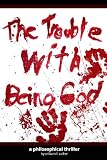
The Trouble With Being God is the first book published by William F. Aicher, about a journalist named Steven Carvelle and the murders he is covering. Dubbed a “philosophical thriller,” The Trouble With Being God delves into heady themes while we watch Steven’s struggle with one question, “Did he do it? Did he really commit those murders?”
Part-horror, part-thriller, the book is written well and attempts to bring in philosophical questions from a non-believer’s perspective. Structurally, the chapters are fairly short and Aicher offers a suggested song playlist to play right along with every chapter.
“Midnight Harvest” (OWC4003) is the second of three Call of Cthulhu adventures currently available from Super Genius Games. While “The Doom From Below” suggested ways to tie the other two adventures to it, this adventure does not. In this modern-day adventure designed for four to eight investigators, players are introduced to the town of Five Lanterns, Rhode Island (suggestions for running the adventure in either the 1890s or 1920s strengthen the book’s introduction) as it celebrates its annual Halloween bash. Of course, this is a CoC adventure so expect cultists, mad dreams, and more from the Things Man Is Not Meant To Know.
I like to start out with the book’s artwork and layout. The book’s cover art by Zak Plucinski depicts a group of trick-or-treaters going on their merry way while a dread skeletal figure looms just beyond their reach.
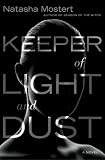
After reviewing Natasha Mostert’s book, Season of the Witch, I was curious to see how this up-and-coming author’s next book would fare. Keeper of Light and Dust is not a sequel to Season of the Witch, but was written as a stand-alone story about the duality of healing as it relates to chi. Mia Lockheart is a mystic protector, a healer who works as a tattoo artist in South London secretly guarding the lives of today’s warriors, a group of boxers. The villain of this tale is a modern day vampire, a man who learned how to steal chi, that mystical and ancient energy force that fuels our souls and provides us with life’s energy.
Well-researched, Keeper of Light and Dust is an excellent nod to the modern day sport of boxing mixed with the ancient form of martial arts. Not often do we find athletics at the center of a supernatural tale, and it’s refreshing to read a book where the sport is part of the plot.
Friday the 13th opens with a flashback to Crystal Lake in 1980 as Alice beheads Pamela Voorhees with a machete. Then we’re introduced to a cadre of modern day horn dogs as they trek through the deep woods somewhere near the now abandoned Camp Crystal Lake. The coordinates of their marijuana crop have been programmed into their GPS unit, but they can’t seem to find anything. Sensing they’re close they decide to make camp and resume searching come morning. Hot casual sex ensues as well as some pot smoking followed by a cavalcade of brutal butchering courtesy of Jason Voorhees. And that’s just the prologue, ladies and gentlemen.
The PDF opens with fiction to set the mood. While written well, the white text in a scripty font was pretty hard to read on a black background, so I missed a lot of the details. The first section dives right into discussion cross-pantheon politics with commonalities broken out. This is a very useful section for Storytellers because it offers a high-level overview of how the Atzlanti philosophy works versus the Pesedjet that they can use in and out of game. I really like sections like this one in game supplements because it helps water down conflicting ideas and offer ideas for players to work together in a game. Sometimes, finding common ground when your characters come from different pantheons can be a challenge.
Since monsters of various types are pretty much White Wolf Publishing’s stock and trade, it makes sense that they would attempt to diversify their product line to include horror-themed board or card games. One of White Wolf’s offerings, Monster Mayhem, has each player taking on the role of a different classic monster, seeking out victims and devouring those parts of them each fiend finds most delectable.
Players begin by selecting one of the five monsters – Vampire, Werewolf, Mummy, Zombie or Poltergeist – and placing the token for that monster on its starting space. The board is a grid of hexagons, and the players flesh out the city by placing the notable location tiles, either randomly or according to one of several sample layouts provided. Each player then draws three victims from the Victim deck and places that card by their monster’s data card.
There are so many Friday the 13th movies, even this retrospective gets a sequel. So let’s continue with our bloody stalk down memory lane as we try to answer the question: Despite these movies being so bad, why do I and millions of others love them?

 Burning Wheel Fantasy Roleplaying System (BW) isn’t like other RPGs. Yes, that first sentence is maddening; “What is BW like, then?!” you shout, frustrated. Let me sum up…