Want to read a horror review before you buy? Read over 225 full-length reviews of books, games, DVDs, music and more from Flames Rising horror and dark fantasy!
Turn Coat is the latest chapter in the ongoing adventures of Harry Dresden, Wizard for Hire. The book description above sets up some interesting possibilities and hints at some deeper character development (not to mention more exploration into the White Council).
We do get some of those things in this book. For example, find out a lot more about Morgan’s past and the things that drive him to act the way he does regarding Dresden. Morgan has always been an interesting character for me. He is one of those guys you love to hate because of the way he treats our favorite wizard. There was always something about him that made me wonder just why he was so untrusting, so ready to kill in the name of the White Council. I never thought he was stupid or rash, the writing always hinted at a fierce loyalty and strong determination. Of course, for this series we readers are only getting Harry’s view on things and that rarely, if ever, painted Morgan in a favorable light (not that you could really blame Harry for that, I’d be less than charitable regarding a guy who wanted to behead me too).
White Wolf takes us back to the Eighties in New Wave Requiem (WW25320). The decision to turn back the clock nearly twenty five years seems to be a brilliant one (Yes, I did say TWENTY FIVE years). Sob. Vampire: the Masquerade hit bookshelves in 1991, so readers never really got a feel for the Reagan Era of gaming. This appears to be their attempt at remedying that issue. This slim supplement weighs in at eighty-one pages; however, it wastes no space with ads (an oddity considering the waste the 1980s created). There are a few pages devoted solely to pieces of art, but these terrific characterizations demand forgiveness as they summon images of The Warriors and an evil Susanna Hoffs.
Slasher Flick is just over 100 pages, an RPG all about octopi. (That’s actually not true.) It’s written and designed by Cynthia Celeste Miller, produced by Spectrum Games. The game is called Slasher Flick. The pages are edged with blood. It’s not a game about serious exploration of the serial killer phenomenon, it’s not a strategy wargame. It’s a game about sitting around a table, having a night like one spent with an actual slasher movie, only in RPG form.
Slasher Flick is simple and focused in nature. Mechanics focus on the drama and tropes of the genre, instead of “killing the bad guy.” Characters are more likely to think the sound of the villain sneaking up is the wind, than a sign that they need to go monster hunting.
Cat and Bones take their romance in a whole new direction (read: planning a wedding) in the third novel in Frost’s series. But nothing comes easily for the pair: Cat, a half-vampire, has some serious soul searching to do over the course of the novel, only partially because her vampire father has torture on the brain. Is she a vampire? Is she human? What does it mean to be either?
Not, of course, that there’s a lot of time to just stand and think. That Cat’s father has found her means that her identity is no longer secure, which endangers her whole unit. Add a very old, very powerful vampire calling on Bones to share power and ally together (which almost certainly means that a vampire turf war is on the horizon) and Bones turning Cat’s unit member Tate into a vampire by request, and things get very, very complicate. Tate’s love for Cat is only the tip of the iceberg.
The concept behind this book is that, just like the rest of us, vampires tell stories. This is a collection of some of the myths and legends told throughout time in vampire communities. Interestingly, none are presented as being ‘true’ – this is left to the Storyteller to decide for himself – and so players can read the book freely without compromising their knowledge of their particular game world’s alternate reality… they will, instead, absorb the tales told amongst the vampires that they play with as little knowledge as their characters have about which are real and which pure fiction.
The book opens with a story about a mirror, and then there’s an Introduction which explains what it is all about. Following chapters look at several myths about the origin of vampires, modern legends (or urban myths) told amongst vampires tonight and finally some of the things that really scare even the bravest vampire.
I normally tackle one product at a time; however, Sean Boyle’s line of HDL games is so entwined with one another that it’s simply easier to treat them as one massive project. The exact products I’m including are the HDL Basic Rules, Perfect Horizon, Demongate High, the HDL cards, and Lucid: Dreamscape Reality. I’ll try to separate these books for clarity’s sake, but I suspect I’ll have to trip back and forth between them on occasion.
The first book in the HDL line is strictly the nuts and bolts of Boyle’s system. It’s a modest read at eighty-seven pages. Like most, my first impression of the book came through a skimming. The artwork, derived from a stable of six illustrators, seems to enjoy the fact that it rests inside a generic system’s corebook.
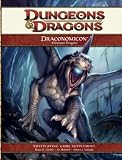
Intended to serve as a collection of information about red, blue, green, black, and white dragons (as described in the Monster Manual, as well as a few newcomer dragons in the shape of grey, brown and purple ones, this work launches straight into its subject with a chapter on Dragon Lore. Much has already been written about dragons and yet the surface of the possible information about these truly epic creatures has been merely scratched. This chapter takes a wide-ranging look at dragons as they exist in the alternate reality of Dungeons & Dragons, including origins, biology, society and outlook, culminating in details of the chromatic dragons. Did you know that a dragon has no ears, and that it grows a complete new set of teeth each time it increases in size? But lest such comments suggest a mere biological creature to studyas you would any other, fear not: the notes portray a clear picture of a being that is truly awe-inspiring, the stuff of legend indeed.
Pulp meets mutants. Can you picture it? Robin D Laws can, and did well.
The opening fiction caught my attention immediately. In two illustrated pages, it manages to cover most pulp detective crime scene tropes, and set the stage for a slightly tongue-in-cheek mutant x-factor (sorry, I had to.) Then the stage is set with a description of the game’s setting. Arbitrarily ten years in the future, the world has undergone the biggest ten years worth of change possible; due to an odd illness, people began exhibiting superpowers. Simple enough statement, but the quality comes from the explanation of how these mutants have changed sports, entertainment, law enforcement, et cetera. It’s serious, while still being able to put a gratifying smile on the reader’s face.
The aim of this work is to muse about some of the motivations and background issues that drive a Promethean, ideas that may spawn adventures and motivations for both players and Storytellers alike. It opens with an atmospheric story told by one Promethean, who appears as a young girl and works the club scene (not a tale recommended for the prudish), and who tells how no job lasts for long…
After explaining what the book is about, the Introduction goes on to raise the interesting idea of playing Prometheans which have been created by a deranged human rather than by another Promethean (the normal method, as described in the core rulebook).
December 21, 2012 is the last day in the Mayan calendar, a day that many believe to herald the end of an Age. “In the Courts of the Sun” is a book written by Brian D’Amato, that explores the “end times” myth from a different perspective — literally.
At well over sixty-hundred and fifty pages, In the Courts of the Sun is an extremely complex work that tells the story of Jed DeLanda, a Mayan descendant who is an expert at the “Sacrifice Game.” The novel opens with an intense Prologue, where we first meet Jed in the mind of Chacal, a ball player who is posing as a King and is about to be sacrificed. Here Jed tells us he’s part of something called the Warren Commission, trying to prevent the end of the world.
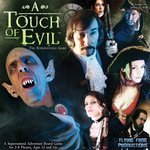
Flying Frog Productions has only produced two games so far; so far — in my humble opinion — they have two winners. The First, Last Night on Earth, is a zombie survival exercise with real goals to achieve that put Flying Frog on the adventure gaming map. Their most recent title is A Touch of Evil, and fans of the Johnny Depp version of the Legend of Sleepy Hollow will find this game somehow familiar…
Players begin by each choosing one of eight characters to portray. Each character has a score of from one to five in four abilities: Spirit, Cunning, Combat and Honor. Players may increase these scores during the course of the game through a variety of means, and all four abilities will come in to play at some point. In addition, each character also has their own unique ability to give their player a particular advantage.
What It Is
Apocalypse Prevention, Inc (or API,) is an action-horror RPG set in a future plagued by monsters, magic, destruction, all the average faire of a post-apocalyptic fantasy setting. The namesake is the corporation who holds back all the above-mentioned things. Characters are agents, working to fight back the destruction of the planet. Pretty simple?
The game advertises itself as “action horror, with a twist of humor.”
The third issue of Robert M. Heske’s Cold Blooded Chillers: Tales of Suburban Murder and Malice is a collection of three short graphic stories, all written by Heske and drawn by artists Adam Swiecki, Reno Maniquis, and Dirk Shearer. Cold Blooded Chillers is an homage to the horror serials and anthologies of yesteryear including E.C. Comics horror titles such as Tales from the Crypt, as well as television classics like The Twilight Zone. The difference is that the aforementioned examples occasionally had a tongue firmly planted in a cheek whereas this collection plays in the dark exclusively.
The book opens with a story called Shadow which is immediately engaging by way of its sophisticated and disturbing tone.
White Wolf has a special place in my heart that goes both ways. It’s a classic tale of love and hate that dates back to the first edition of Vampire: the Masquerade I bought on a whim. As they dwindled down their successful runs only to reboot them, I found myself enjoying their releases less and less. I felt they were trying to reinvent their own wheel and, well, just couldn’t do it. I took on Hunter: the Vigil and hoped for the best.
This monstrous tome pushes four hundred pages and yet somehow manages to enrapture the reader. There are small bits off; however, this is an exceptional book. Let’s take a look at it. The layout of Hunter is typical to their new lines. A cropping of artwork throughout the book lines the upper border of the book while fading into a gray border that frames each page.
Blue Dragon Plus for the Nintendo DS is a sequel to Mistwalker’s console RPG Blue Dragon. This time around, the straight-up RPG action has been replaced with a real-time strategy mechanic but everything else, from the Dragon Ball-esque graphics to the big bad Shadows, has returned.
The original Blue Dragon was a hotly-anticipated title for the Xbox 360. Not only did it have an esteemed pedigree with the creator and composer of the Final Fantasy series onboard but the 360 was going through a bit of an RPG drought. Its release helped scratch an itch a lot of Xboxers had and was a decided “hand across the aisle” to the Japanese market who regarded the 360 as an American machine with American games.
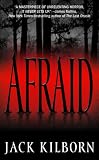
One word describes the first novel from author Jack Kilborn: relentless. Much like the works of Jim Butcher and David Morrell, Kilborn’s premiere work, AFRAID, is non-stop tension. Each section break, while short, somehow manages to ratchet up the suspense to the point that you wonder how much more you can take. You won’t want to put the book down once you start it and a small part of you will wonder what possessed you to pick it up in the first place. The story is a non-stop horror ride…once on, you can’t get off.
The story centers on Safe Haven, Wisconsin, a small town that prefers its privacy over even economic depression. Snowbirds flee south for the winter, leaving the 900+ full-time residents to their quiet, peaceful place of fishing and relaxation. That is, until what appears to be a helicopter crash ignites a world of trouble for every one of the town’s 900 inhabitants.
The story is about a young man living in a police state. The internet has become the chief propaganda tool of the government, and camera-like tentacles are everywhere to monitor citizens. Broad skyscrapers dominate the skyline with propaganda dominating advertising spaces.
Current events make up the backdrop of the story as well. In One Live Beast, rising gas prices, terrorism, and corrupt business practices contribute to the rise of the police state. All of these lead to Christopher’s rise as a hero, as his attempt to rebel against the police state inadvertently leads to him gaining his powers.
It’s no secret I’m a fan of the Hellboy franchise, so when I found out that Doug Jones (Abe Sapien) was acting in a new series called Angel Of Death, I was pretty excited about it. Then I found out that the series is not your full-length, standard fare — they’re webisodes offered for free on www.crackle.com, a venture by entertainment giant Sony.
Created by comic industry veteran Ed Brubaker, Angel Of Death is a series starring Zoe Bell. Zoe plays a character named “Eve,” a brutal assassin who starts off the series with very little humanity. The first episode introduces us to her deadly world — a world so messed up that she accidentally kills a little girl. The series explores Zoe’s character in full detail, to explore whether or not she’s truly an assassin without a conscious. Instead of following orders from her boss “aka lover” Graham, she’s gone renegade to do the bidding of a very unhappy ghost. Does her victim haunt her? Or did the knife that was stuck in Zoe’s brain have some kind of an effect on her?
Anime has come a long way since Astroboy and Voltron, as is evidenced by even the merest glimpse of Ergo Proxy. This visual delight, though perhaps not the latest, is – in this reviewer’s opinion – one of the greatest anime series to come out in recent history.
Delightfully dark, Ergo Proxy revolves around two main characters: Re-l Mayer and Vincent Law. Re-l, privileged Citizen and Security Bureau member of the post-apocalyptic eden-dome of Romdo, becomes rapidly obsessed with a bizarre series of murders committed by AutoReiv androids.
Under the Skin is the first adventure using the Storyteller Adventure System that I’ve read, so I found myself looking forward to reading it. Adventures are a tricky bag, especially to a setting as thick as White Wolf’s World of Darkness. I say they are tricky mainly because there always exists the tendency for them to railroad players in an attempt to make sense of the scripted adventure. Some games find a way around this by theorizing alternate endings or sometimes not even offering a true ending (though few do the latter). This adventure makes little effort in offering a free-form style, which we’ll discuss later in the review.

 Turn Coat is the latest chapter in the ongoing adventures of Harry Dresden, Wizard for Hire. The book description above sets up some interesting possibilities and hints at some deeper character development (not to mention more exploration into the White Council).








 It’s no secret I’m a fan of the Hellboy franchise, so when I found out that Doug Jones (Abe Sapien) was acting in a new series called Angel Of Death, I was pretty excited about it. Then I found out that the series is not your full-length, standard fare — they’re webisodes offered for free on