Note: This essay, written by Søren Ahrensborg Kamper, contains narrative spoilers for Knights of the Old Republic and The Sith Lords.
A Sith Lord with yellow eyes and a red lightsaber is not automatically frightening. Put that Sith Lord in a role-playing game, give them an impressive damage bonus, and they may become something rather less disturbing: a sensible character build. Star Wars has always treated the Dark Side as a spiritual danger; a promise of power that eventually demands something in return. Games have a more awkward task. They must make that bargain playable without turning it into a loyalty card where every act of cruelty earns another useful perk. The interesting question is not whether an RPG lets us be evil. It is whether the game can make us uneasy about how easy being evil has become.
This tension runs through the wider history of Star Wars games, but it is particularly visible in three role-playing games: BioWare’s Knights of the Old Republic (2003), Obsidian’s Knights of the Old Republic II: The Sith Lords (2004), and the ongoing MMO The Old Republic. All three invite players toward the same darkness. They do not, however, agree on what it should cost.
When the Dark Side Becomes Arithmetic
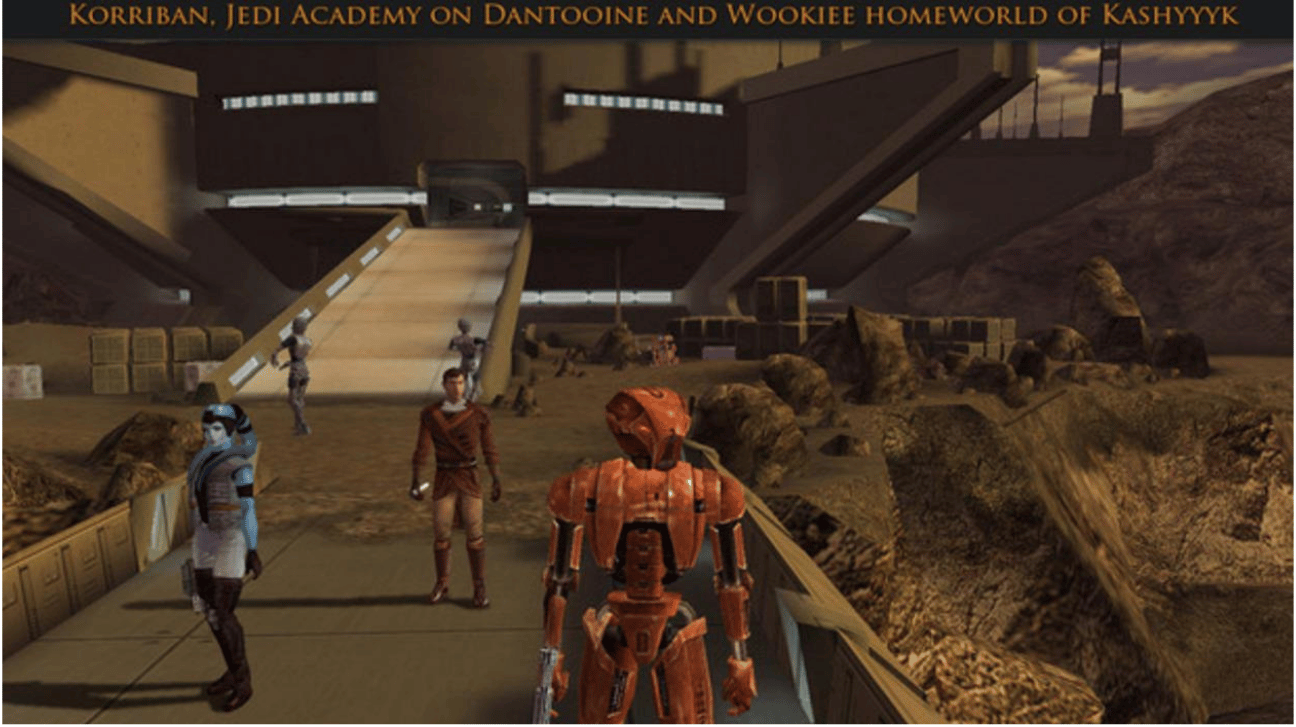
The original Knights of the Old Republic places a clear alignment scale beneath its conversations with other characters. Show mercy, and the character moves toward the Light Side; threaten or exploit someone, and the needle slides toward the Dark. The system also affects the Force. A character aligned with the darkness spends fewer Force points on Dark Side abilities, while Light Side powers become more expensive. Mechanically, it is elegant. Morally, it creates a peculiar incentive: if the goal is to throw lightning efficiently, unpleasant behavior starts looking like good financial planning.
That is not quite horror. When corruption arrives as a visible statistic, players can plan for it, calculate around it and sometimes pursue it as enthusiastically as they would a better pair of boots. The game is most unsettling when it escapes its own arithmetic. Near the end, a Dark Side path allows the protagonist to exploit Zaalbar’s life debt and compel him to kill Mission, the young friend he has protected throughout the adventure. The mechanics permit the choice, but the emotional damage does not fit neatly inside the alignment meter. A relationship built across dozens of conversations becomes the weapon. This is Star Wars at its bleakest, not because the villain has acquired an additional Force power, but because loyalty has been made monstrous.
The Dead Inside RPG offers a more troubling use of a resource meter: Soul Points turn the erosion of a person into something the player must manage, and extraordinary powers can demand spending what remains. That distinction matters. A meter can strengthen horror when it represents something a character fears losing. It works less well when its chief purpose is to unlock a more spectacular way to win a fight.
KOTOR II and the Horror of Influence
Knights of the Old Republic II makes the problem more intimate. Its ruined planets, exhausted survivors, and half-buried wars already suggest a galaxy that has not recovered from its own heroic legends. Yet the most disquieting addition is relatively modest: companions notice what the player does. Obsidian’s influence system lets conversations and actions change relationships, unlock personal histories and, for some companions, affect alignment itself. Corruption stops being merely a private statistic. Under the right circumstances, it spreads.
Kreia, the Jedi Exile’s relentless teacher, is the ideal guide to this sort of discomfort. She distrusts easy moral certainty and has an irritating talent for questioning whatever seemed reasonable a moment earlier. An act of charity may invite a lecture about dependency; a brutal solution may reveal consequences that cannot be repaired with an apologetic dialogue option. She is not always right, nor is the game asking players to accept every pronouncement as wisdom. Her presence simply ensures that the familiar RPG reward of choosing the kind answer can no longer be mistaken for a complete moral philosophy. For once, the companion most likely to unsettle the player does not need to jump out of a cupboard.
The best horror frequently attacks a character’s sense of safety rather than their health bar. What matters is a vulnerability the player actually cares about, not merely a more elaborate way to inflict damage. KOTOR II leans into this nuance. A wounded party can be healed. A companion slowly persuaded to become someone else is harder to restore. It is also a particularly uncomfortable form of power fantasy: the player is rewarded with influence while the fiction asks what that influence is doing to another person.
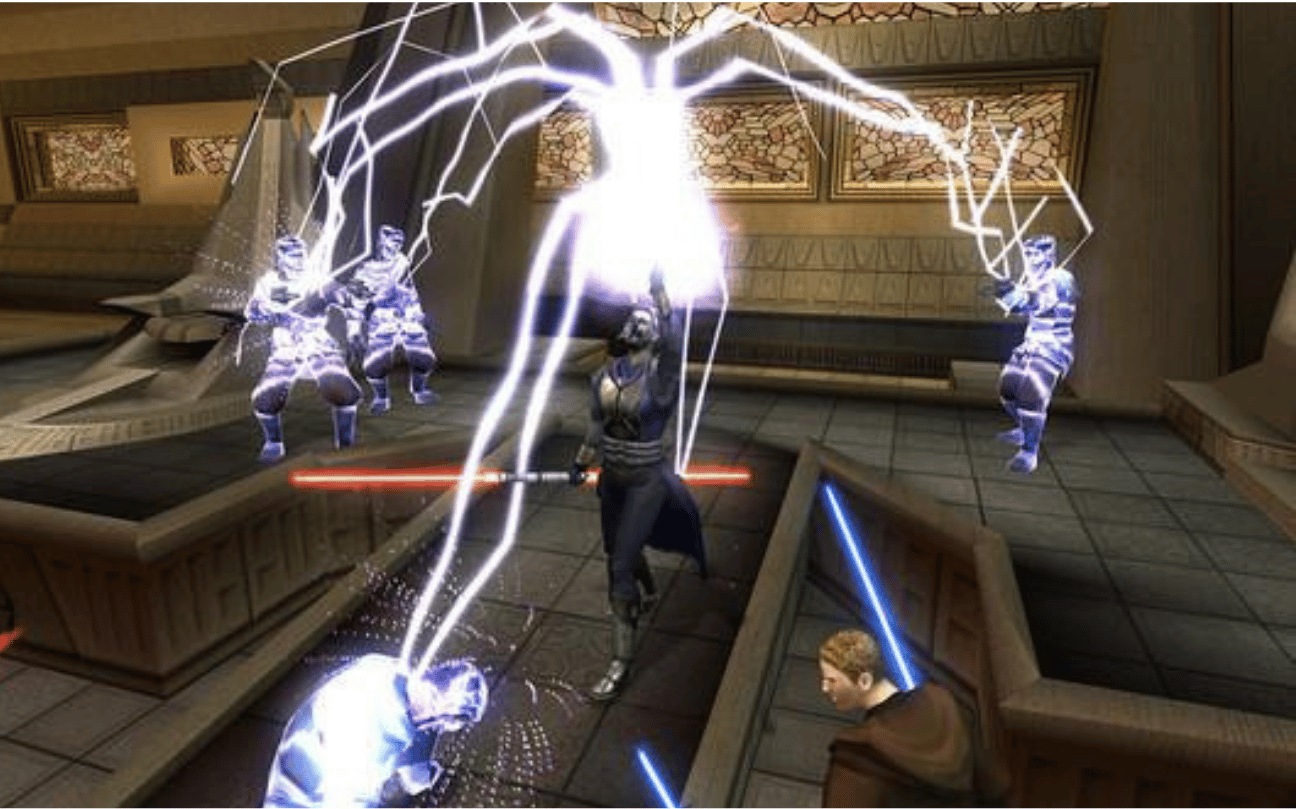
The setting also reinforces this idea. Darth Nihilus consumes life through the Force, an appetite on a planetary scale. Malachor V is less a sinister location than a wound left open. The Exile’s own estrangement from the Force turns absence into a source of dread. These are cosmic-horror ideas in a universe usually comfortable with prophecy and redemption. There are few tentacles, admittedly. There is, however, a very convincing sense that the galaxy has been hollowed out by people who believed they were strong enough to control it.
The Power That Collects Its Debt
The Old Republic approaches the bargain from a different direction. Its Sith Inquisitor story is built around survival through forbidden knowledge. The Inquisitor acquires and binds Force ghosts, drawing on powers that offer a route past enemies who ought to be impossible to defeat. The bargain eventually threatens the character’s health and control. Here the Dark Side resembles the oldest haunted-house rule: if something dead offers to help, ask what it wants before opening the door.
That is a stronger horror idea than the MMO’s broader alignment system, which can encourage players to see Light and Dark choices as a route to a preferred identity. A massive online RPG must let thousands of people keep adventuring. It cannot easily punish an entire character build every time the story invokes corruption. As a result, much of the Inquisitor’s price is paid in the narrative rather than through a permanent loss of player power. The ghosts become a threat, but combat still needs to remain enjoyable on Tuesday evening when someone has half an hour before dinner.
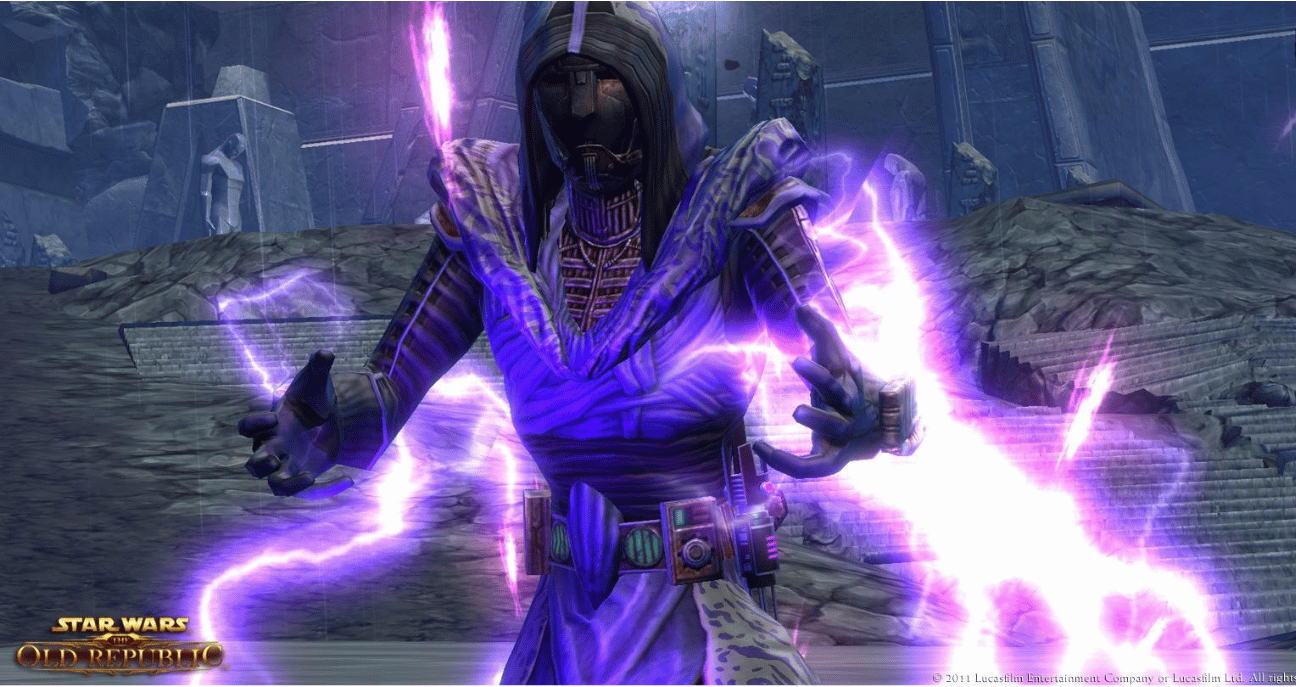
The Sanity cost of magic in Call of Cthulhu: The Wasted Land offers a useful comparison. Giving a spell a price changes the way it feels to use, particularly when the price is something more personal than a depleted mana bar. The Inquisitor’s story understands that dramatic principle even when an MMO’s mechanics cannot enforce it consistently. The most unsettling moment is not the lightning itself. It is the realization that every shortcut has allowed something else a little further inside.
None of the Star Wars games mentioned are conventional horror titles, and that is precisely why the comparison is useful. A monster can threaten to kill the hero. The Dark Side promises to make the hero strong enough that monsters no longer matter, then asks what sort of person is left. Knights of the Old Republic occasionally makes that cost devastatingly personal. KOTOR II lets it reach the people travelling beside you. The Old Republic turns it into a debt owed to things that should have stayed dead. The Dark Side is frightening not when the screen turns red, but when the game makes power feel like something that has already begun exacting its toll.
About the Author: Søren Ahrensborg Kamper is the editor of Star Wars: Gaming, an independent publication exploring the history, design, and culture of Star Wars video games.
Leave a Reply