Want to read a horror review before you buy? Read over 225 full-length reviews of books, games, DVDs, music and more from Flames Rising horror and dark fantasy!
The new season of the Shadowrun Missions shared campaign takes the storyline to Seattle, and this first adventure opens with atmospheric fiction as a veteran local ‘runner takes a call about a job and wonders which of the newcomers to town might be up for it…
The overall approach to structure is interesting. With the core use of ‘shared campaign’ scenarios being at conventions or other settings where time is limited, it is necessary to make effective use of the time available and the structure is designed to facilitate this.
The mythology of the British Isles fascinates me. Long before Christianity reached their shores, the people of England, Scotland and Ireland had their own fascinating, rich and complex religions. Sadly, their gods and monsters were given the short straw– devolving into leprechauns and pixies if they survived in our social conscious at all. But if you dig deep, you can usually find them still, primal and brutal, beautiful and mystic. And that’s where The Blackness Within shines.
The Blackness Within is Apex Publication’s collection of stories on the Celtic god Moccus, a god traditionally associated with boars. While both pigs and boars were held as sacred by the Celts, the boar was specifically revered for its ferocity and the strength one would require to bring it down. Little is known about Moccus– he may have been a fertility God, or one of the Hunt, or even a psychopomp, but little can be said for certain. The Blackness Within sets out to answer these questions with another: what would happen if the savage, earthen god returned today?
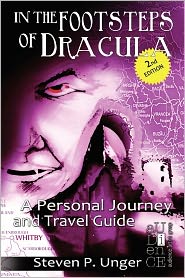
It’s lonely being someone who takes horror so seriously, it borders on being a clinically definable malady. It’s rare to come across another human being whose affliction rivals my own. But alas, I have found him and his name is Steven P. Unger, author of the book “In the Footsteps of Dracula: A Personal Journey and Travel Guide (Second Edition)”. In fact, he and I could rightfully start a club for people like us, only I fear we’d spend our days arguing over who gets to be vice president, because being the president of such a club would be more than a bit embarrassing.
But I digress.
Unger’s book is a thorough analysis of the people and places that comprise Bram Stoker’s Dracula, both within the text and without.
Preludes. Some of my best memories of Storyteller games circle around Preludes. I could sequester away a player for perhaps an evening and, for a session, really get into that particular character’s head. Dice rarely hit the table. It was about motivations and character. I mention this because this eBook flirts with being a look at preludes. Let me clear that it isn’t, but even the author allows that some Storytellers will use it for exactly that purpose.
The PDF’s artwork is mostly good. In fact, there are some pieces within the file that are damned good (no pun intended. Really.). I personally liked Shane Coppage’s art the best (the cover belongs to this artist). The artwork proved a little distracting in that some pieces look like Hollywood was tapped for character inspiration.
The region guides for the Savage Worlds Hellfrost setting, with the exception of a couple which focus on non-geographical elements, comprise three discernible groups; “Evil” lands which have been overrun by the forces of the various villainous factions (the Liche Lands previously reviewed are a good example of this) and which are inimical to player groups; Border lands, such as the Freelands, where safe havens of civilization exist beside lurking dangers that threaten travelers; and “Civilized” nation states in the Hearthlands, where shadowy evil does lurk, but not in the same numbers as in the other places. The Magocracy is an example of the third category, and as such is a good location for WFRP-style Enemy Within type campaigns.
After a short introductory paragraph to set the scene, this pdf opens with a discussion on Social Hierarchy.
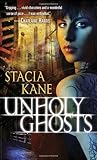
It isn’t often that I pick up a book (this one purchased with my own cashy money) where it’s got so much going on, I’m not sure how to start a review. Stacia Kane’s Unholy Ghosts is like that. This isn’t just a ghost story — though it works admirably (and scarily) well in that area. It’s not just postapocalyptic, though again, the brave new (scary) world that Stacia imagines is an amazing one. And though it’s not really a private investigator story, it’s got a lot of similarities to that genre, as the main character goes about solving a mystery and, eventually, confronting a threat that could destroy the world as she knows it. So it’s got epic scope, but the characters aren’t your typical heroes — in fact, they’ve got more in common with your typical villains, and that’s one of the areas where Stacia really succeeds: making characters you don’t really want to trust, but can’t help but like. Or, at the very least, sympathize with.
I read the short novella “Dead Stay Dead” before I realized that it was the second story in the new “Zombie Feed” series from Apex Book Company. After a bit of research I found the short story “Asylum” was the first story released in the series, which also happened to have recently arrived as a reviewers copy book in my mail. Feeling kinda sheepish that I hadn’t done my home work before hand, I set out to read “Asylum” to cover my bases. And I’m glad that I did as this story was unexpectedly interesting to read and author Mark Allan Gunnellis got a lot of mileage out of a mere 80 pages.
The story is centered on several homosexual men who barricade themselves inside a gay bar when the zombie apocalypse begins.
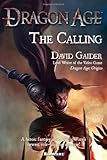
When I first read Dragon Age: The Calling, I hadn’t played any of the Dragon Age video games (although I did start playing Dragon Age: Origins for my PS3). My experiences with the Dragon Age setting was from playing a few sessions of the Dragon Age RPG that is published by Green Ronin and reading a few of the IDW Comics. The setting was what hooked me enough to pick up this novel and dive into the world.
Fantastic from page 1 to page 32. This is a fun looking issue that I wouldn’t mind if it were done for adult readers, but since it is for kids I can say it rocks! Every artist brings a unique look that is inviting and yet scary enough for the genre. I knew I was in for a treat when I saw the pumpkin grow eyes in the first story. I also want to add that black and white was the right way to go here.
There were 6 short stories in this issue and every single one of them I enjoyed. Sometimes you can really get things played down to the target audience but I can happily say that I enjoyed this and I think the age range should go from 6 – 200.
If you are a looking for a deep and philosophical game to explore the intricacies of your mind, then this is not the game for you. However, if you are looking for a light-hearted and whimsical romp in between long running campaigns then this game can easily fill that need. Early on the game touts itself as a ‘Beer and Crisps’ game (or a Beer and Pretzels game in the States), and it adheres to this easygoing philosophy.
One takes on the role of a Jerkian Warrior, a clone of the great leader whose purpose in life is to entertain the Exalted Emperor and feed the Exalted Emperor. It’s not an easy life being among the lowest ranks, and a gruesome (though entertaining) death is almost a certainty. One of the few ways to ensure your own survival is through treachery and betrayal of your fellow Jerkian Warriors; rank hath many privileges — one of the most obvious being fewer missions in which death is likely.
A long while ago, Matt asked me if there was anything in the DriveThruComics.com store that I’d like to review, and I spotted a new (meaning new to me) superhero series called Freshmen. The first six issues were up and available, so I requested them and wanted to give them a go. (I found out after reading all six issues that the series is co-created by Seth Green of Robot Chicken and sundry other projects, which makes *perfect* sense.)
Here’s the short of it: due to dorm overflow, fifteen college freshmen are shipped over to live in the science building, which has been modified to create living space. When a lab experiment explodes, their cells evolve — granting them powers related to whatever they happened to be thinking at the moment.
What is more mysterious than an Oracle? It is the turn of the Oracle character class to come under the microscope: no mere list of feats but a detailed look at the potentials and options available to players who fancy being an Oracle.
We begin with an overview of the class as a whole, discussing the salient points of an Oracle. It’s an interesting class, a spontaneous caster but divine rather than arcane (the answer to those of us who mutter that surely our deities would never let us choose the wrong spells for the day…), with many opportunities for the role-player as they tend to be good socially as well as with that air of mystery! Speaking of mysteries, your choice here sets the flavor of the whole character, affecting him in terms of game mechanics as well as laying the seeds for role-playing and characterization. As they are so important, there’s a thumb-nail sketch of each one, to aid your choice based on just what kind of oracle you would like to play. Oracles are well set up for defense, if offensive capability is desired crafty choices of mystery (Battle is good, or an elemental one) can prove an advantage. Oracles will tend to specialize in something, but that thing they can generally do very well indeed.
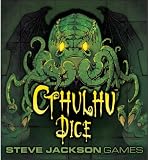
Imagine sitting down at a diner and breaking out…CTHULHU! Well, to play this game that’s exactly what we did. Produced by Steve Jackson Games, Cthulhu Dice is a rapid descent into madness. You can literally lose your mind during this game or, as our waiter put it: your lunch.
We played with three people. To set up, each player gets three tokens which are included with the dice. Those beads represent your sanity. Then, the owner of the game (Moi, in fact) gets to choose who casts the first curse. Player A rolls to curse Player B and gets a tentacle. Player B loses one point of sanity to Player A and gets to roll a response. Player B rolls a Cthulhu. Now everyone loses a point of sanity. The turn has thus ended and the next player gets to go.
Region Guide 1: Sacred Places is the first proper title in a series of small pdfs for the Savage Worlds Hellfrost setting by Triple Ace Games. The guide is only 12 pages long, but is cheap, and adds more setting information to the game. The region guide series are not material that was cut from the Hellfrost Gazetteer, but additional material for the GM. In conversation with Wiggy, the author of Hellfrost and these region guides, he stressed that this was not an attempt to gouge fans, but to create additional material for certain areas of the game in addition to that found in the core books. When you look at the region guide series as a whole, you’ll find there are well over 400 pages of extra material in total, dwarfing the size of the gazetteer. Nor is any of the information in the gazetteer repeated here; this is all new material. As a personal note, I’d also like to add that Wiggy has made many pdfs freely available on the TAG website which also add to the Hellfrost milieu – hardly the action of someone wanting to gouge customers. So, why not just create a Gazetter 2 (and 3, and 4…) book instead of all these pdfs? The advantages of the region guide series are twofold; firstly, these pdfs can be released quite quickly; if Wiggy had wanted to wait until he had finished all of them before releasing them as a book, then there would be a much longer downtime before they saw print. Secondly, the GM can buy whichever pdfs he wants, depending on which areas he finds interesting or where his players want their characters to go.. No-one is making you buy all of the series.
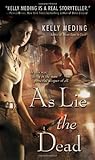
Kelly Meding, I have a bone to pick with you. After introducing a seriously awesome minor character in Three Days To Dead, you neglected to include even one scene with Smedge the Bridge Troll in the sequel. Sure, you gave us a seriously hot shape-shifting osprey who can go into angel mode with Phin. You introduced us to a sweet-yet-strong kestrel shifter, who alternates between protected and protector in Aurora. You brought in the mysterious shifter lawyer with a talent for vague clues with Michael Jenner. So, one could say that the new awesome outweighs the old awesome.
“This new series is ripped right out of the real-life drama unfolding on the Mexico-Arizona border! FEEDING GROUND reaches a large and diverse audience no matter your personal point of view on the issue. In this factious story, a famine caused by Blackwell Industries drives Diego Busqueda, a noble “coyote,” to lead a band of Mexican border crossers across the unforgiving Devil’s Highway, a desert cursed with blistering days and deadly nights. Back home, Diego’s daughter Flaca discovers that something hungrier prowls the factory fields. Stalked and persecuted, can the Busqueda family maintain their dreams of immigration or will the horrors of the desert tear them apart?”
Mash-ups are all the rage; whether it be Pride and Prejudice and Zombies, Abraham Lincoln, Vampire Hunter, or any number of lesser-known works, putting two seemingly unlikely things together has become a literary obsession recently. Revere: Revolution in Silver carries on this growing tradition, positing that, in his spare time, Paul Revere was actually a werewolf hunter and member of an occult organization dedicated to defending the world against supernatural threats.
With the early days of the American Revolution as the backdrop, Revere: Revolution in Silver takes this premise and runs with it. Doing an interesting bit of world-building, writer Lavallee and artist Bond create a whole new mythology around the famous American revolutionary.
The Hellfrost Region Guides are short, inexpensive pdfs (earlier guides tended to cover larger areas, and are 12 pages, later ones cover smaller areas and tend to be 6 pages) covering a particular aspect (usually geographic) of the world of Rassilon. In this series of reviews, I shall examine each region guide in order. The format of each is the same; there is no artwork, simply a title page with a one-column introduction to the area, then several pages of double-column information, some pages with sidebars. The text is clear and editing, for the most part, is average for the RPG industry; most region guides have a few typos here and there, but nothing too bad. As such, the Style points for each review will be the same unless there is something especially pronounced in a particular region guide.
The traditional print run of Mage: the Awakening ends with my favorite kind of supplement–the advice book. Although gaming advice is merely a click away today, some of the first useful gaming advice I gleaned came from the original White Wolf lines. Rather than rehash decades old thoughts on gaming, the focus instead turns to new ground. This book tweaks the core principles–setting, magic mechanics, and character–before setting loose some ideas on actual Mage chronicles. I’ll try to go chapter-by-chapter once I get the artwork out of the way. Before I do, one pointer: there is never a reason to quote Ayn Rand. Ever. Seriously.
For me, the book’s artwork isn’t very special. I do like the cover art by Imaginary Friends Studio; however, the interior art wasn’t engaging. It did tie directly to the fiction, which earned it a step up.
Back in the mid-1990s, Top Cow launched a daring new series about an artifact that could be wielded only by women — and the man who tried to take possession of it. In Witchblade: Origin, the first eight issues of Witchblade are brought to an audience who missed them the first time around. It’s a great origin story: Sara Pezzini, the tough cop who becomes the bearer of the Wicthblade, is far more vulnerable here than we see her at the current point in the series. She’s largely alone in the world: she has an irresponsible sister, a neighbor whose murder leaves her with a teen girl seeking her advice, and a partner who dies in the first issue. Her parents have been dead for some time, but she still thinks of them, often, talking to them in the box text. While she knows she has her boss — who is much like a father to her — and coworkers who care about her, she hesitates to share herself with them, especially when she is feeling weak.

 The new season of the Shadowrun Missions shared campaign takes the storyline to Seattle, and this first adventure opens with atmospheric fiction as a veteran local ‘runner takes a call about a job and wonders which of the newcomers to town might be up for it…


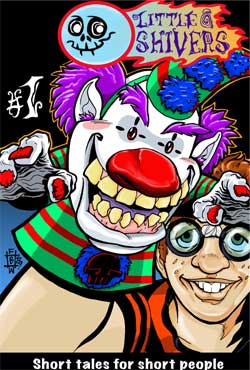 Fantastic from page 1 to page 32. This is a fun looking issue that I wouldn’t mind if it were done for adult readers, but since it is for kids I can say it rocks! Every artist brings a unique look that is inviting and yet scary enough for the genre. I knew I was in for a treat when I saw the pumpkin grow eyes in the first story. I also want to add that black and white was the right way to go here.



 “This new series is ripped right out of the real-life drama unfolding on the Mexico-Arizona border! FEEDING GROUND reaches a large and diverse audience no matter your personal point of view on the issue. In this factious story, a famine caused by Blackwell Industries drives Diego Busqueda, a noble “coyote,” to lead a band of Mexican border crossers across the unforgiving Devil’s Highway, a desert cursed with blistering days and deadly nights. Back home, Diego’s daughter Flaca discovers that something hungrier prowls the factory fields. Stalked and persecuted, can the Busqueda family maintain their dreams of immigration or will the horrors of the desert tear them apart?”
 The Hellfrost Region Guides are short, inexpensive pdfs (earlier guides tended to cover larger areas, and are 12 pages, later ones cover smaller areas and tend to be 6 pages) covering a particular aspect (usually geographic) of the world of Rassilon. In this series of reviews, I shall examine each region guide in order. The format of each is the same; there is no artwork, simply a title page with a one-column introduction to the area, then several pages of double-column information, some pages with sidebars. The text is clear and editing, for the most part, is average for the RPG industry; most region guides have a few typos here and there, but nothing too bad. As such, the Style points for each review will be the same unless there is something especially pronounced in a particular region guide.
