Want to read a horror review before you buy? Read over 225 full-length reviews of books, games, DVDs, music and more from Flames Rising horror and dark fantasy!
I just had the chance to watch The Last Lovecraft: The Relic of Cthulhu and I was impressed! For an independent film (one that has also won a couple of awards, I might add) this is an awesome film. What’s it about you ask?
Well, there is a story to be told here and quite honestly, the reason why this is a mini-review is because I really don’t want to spoil it for you. I feel this is the type of film you have to discover… laugh out loud… groan… And realize the costuming is just that much better than Mighty Morphin Power Rangers or The Keep.
Part of what makes this movie strong is the characterization and the nerdly discussions, but there are some other surprises hidden between the script’s pages.
Presented as another entry in the JackPoint website/blog, and tagged with the warning to beware of icebergs, here is an eclectic discussion of all manner of things in and under the water.
First up, a discourse on The Reality of Sea Travel. Whilst people and goods are often transported by air, the sea is still used extensively, particularly for the transportation of bulky goods and for recreational purposes. The vessels used have developed, and submarines are no longer merely military playthings but used commercially, but sea traffic is by and large unchanged in its general nature. One thing to bear in mind is that watercraft can be leading, if not bleeding, edge or they can be archaic…and that these tech levels can combine in a single craft – consider a sailboat with the latest navigational and communications gear, for example.
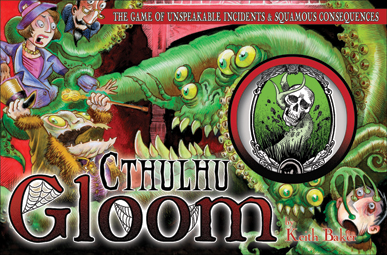
To celebrate Lovecraft’s birthday this year, we went over to a friend’s house and popped open our shiny, new copy of Cthulhu Gloom from Atlas Games. Dubbed “the game of unspeakable incidents and squamous consequences,” our group consisted of five players — two of which weren’t as familiar with the Lovecraft mythos as we were.
So before we began, we attempted to channel Kenneth Hite and explain who Lovecraft and Cthulhu were. It was interested to see their reactions when they learned that one man inspired so many popular horror authors like Stephen King, Brian Lumley, etc. That, for me, was the best part about the game because then the cards mean something beyond their pretty pictures.
And pretty they are indeed. Instead of families, you play investigators ranging from those who work at Miskatonic University to the Village of Innsmouth. Since we played with five players, we each paired down our investigative group by one and gave that character to the fifth player.
“A small team of treasure hunters struggles to excavate a dangerous and legendary treasure pit before a massive storm hits Sable Island, the ‘Graveyard of the North Atlantic’.Equipped with all the latest technology, the scientists believe they are prepared against all of nature’s fury, but nothing can prepare them for what they are about to unleash from The Vault.”
This is seriously a solid-looking issue that doesn’t have a lot of horror elements in it until the end. A huge plus on this book was the characters staying perfect from panel to panel. Every page had so much detail that it was like a moving painting telling a visual story.
Midnight at the Spanish Gardens is not the kind of book I normally review for Flames Rising. It is certainly a fantasy novel, but the fantasy elements don’t actually end up being all that important: the book revolves around the choices that people make in their lives, and what they might do differently if they had it to do all over again — or if fate or chance had played out the events differently. But while it’s not truly a dark fantasy, I wanted to review it here after reading an ARC from the author because this is the type of book that held me and didn’t let me go. I actually stood in a doorway the first night I was reading it, intending to walk somewhere to put it down, expecting to head off to bed for the night, but I flipped page after page in my nook and kept reading, standing there, for probably twenty minutes. Then, realizing I clearly wasn’t going to stop, I gave up my rational decision to head to bed and sat down and read more instead. Not only that, but even when I wasn’t reading the book, I was thinking about it. That experience tells me that this is a book worth sharing.
Opening with a Setting Introduction, which describes the variety of game types that you can play in this bleak yet chaotic apocalypic future-Earth, a setting rich with a wealth of opportunity for those brave, perhaps vicious, enough to sieze what they want and defend it against all comers. The background is explained, a gradual decline brought about by wars, economic catastrophes and environmental damage: no single apocalyptic event but a succession of disaster after disaster that brought once-green Earth to its present state of barren wasteland scattered with giant city-fortresses ruled by warlords.
Scene set, Chapter 2: Races looks at, well, the races available to players. The default is, of course, human beings – as described in the ‘Humans’ section of the Dungeons & Dragons 4e Player’s Handbook.
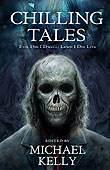
Horror is a subjective state; what one finds horrifying another might find merely gruesome or grotesque. It is within this ambiguity I find myself regarding Chilling Tales: Evil DId I Dwell; Lewd Did I Live. There was horror within to be sure; also within was loneliness, isolation, despair, and a lot of really good writing.
Standout stories for me in this collection included “Tom Chesnutt’s Midnight Blues” by Robert J. Wiersema and “404” by Barbara Roden. Both are among the first three tales and get the anthology off to a great start. “Tom Chesnutt’s” is about a philandering folk singer who inadvertently causes his wife’s death. She haunts him now, not actively rattling chains and moaning but rather showing up at his gigs – a phantom only he can see – as a reminder of his misdeeds. “404” is a distressingly familiar tale about office workers who discover their comrades simply disappear one day. As their numbers dwindle and their isolation increases, they each find themselves coming under the watchful eye of their supervisor.
If you follow Jim Hines’s blog, you know he’s been experimenting with electronically self-publishing short stories, many of which originally appeared in print publications. His first collection, Goblin Tales, did well enough that he’s releasing another group of six tales, Kitemaster and Other Stories, in mid-August. I caught Jim’s note for reviewers and volunteered, and I think this is another strong group of stories, mostly for the lighthearted fantasy crowd. Three of them I’d previously purchased via fictionwise, and have been favorites of mine since the first reading, but three were brand new to me, and I think all are solid stories — even the one that left me with something akin to the willies over a series of puppet deaths. But we’ll get there in a minute.
Daniel Solis’ Do: Pilgrims of the Flying Temple is a different type of game for me to review. It’s not the kind of game I would pick up on my own. This isn’t to say I am against indie games because, well, I have dozens of examples to the contrary. No, the genre just isn’t that interesting to me and I know my gaming group mostly wouldn’t get behind the concept.
With that said, the book really won me over (can’t make a claim to my gaming group though). There are three key elements to this clever game that make it intriguing and full of potential for gamers and, more importantly, young gamers. We’ll go over those elements (maybe two more) and I’ll show you why this is exactly the kind of game I’d play with my son (he’s seven or, as he’s say, seven and a half).
The idea of a wandering pilgrim is attractive even when laced in an anime dressing (not my thing).
The title ‘comic nerd’ has always escaped me. They are cool, they are nifty, and their storylines are quite often entertaining with the added bonus of some truly interesting artwork. Yet something has always kept me from diving into the pool of comics, and I’m not sure what that is since I enjoy reading them. Calebros, was no different. It was a delight from beginning to end and reminded me why Clan Nosferatu always ranked high on my list of favorites.
Calebros is part of a series of comics that were produced several years ago that followed the so the uninitiated reader should be warned that jumping into the story arc with this work will leave one rather confused. One the few flaws I caught was the lack of an introduction. Some background information for the new reader would have been greatly appreciated and it would also have helped spark my own memory in regards to White Wolf’s now dormant story arc.
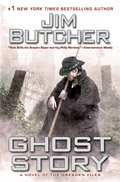
Hot off the presses, Ghost Story is the 13th installment in the Dresden Files series by Jim Butcher. At this point in the series, I would like to point out that if you haven’t read Changes or some of the earlier books, then this review will likely contain ***spoilers***. Be kind to the reviewer, folks.
First things first: due to the way characters are interwoven throughout the fabric of the plot, I would recommend that new readers do not pick up “this” book as the first one. While Butcher does a fine job of trying to facilitate the back story to remind readers who some of the existing characters are, the emotional gut-wrenching reaction that you may have as a reader will fizzle and pop like a dud firecracker.
“Thirteen new tales of terror peer into the lives of those affected by Lucifer’s diabolical scheme to kick-start the Armageddon! Stories feature characters as diverse as a conniving rock star wannabe, an abused teenager, a pair of star-crossed Mafioso lovers and the world’s last ultra-hero, the last of whom must choose between staying with the love of his life while the world goes to Hell (literally) and fighting the Great Cthulhu in a desperate (and most likely futile) attempt to save the world.”
Ugh, yes please! This is one great looking collection. Not a single story seemed to be any less visually appealing than the next. Some of the stories I liked the looks of best were Strays, No One Knows and Momma’s Boy.
The 1974 television series Kolchak: The Night Stalker never got rave reviews from critics. Only twenty episodes of the show exist, plus two TV movie/pilot episodes: The Night Stalker (1972) and The Night Strangler (1973). The special effects, even by the standards of the day, were cheesy and unremarkable, though the stories themselves were interesting and provided a wide variety of paranormal beasties from folklore the world over instead of rehashing zombies or vampires week after week. Unfortunately, the TV movies proved vastly more popular than the TV series they generated.
It should come as no surprise that a graphic novel treatment of Kolchak might spring into being as well, and at that before the reboot of the series. Enter Moonstone Books with their long-running Kolchak series, and lo, Kolchak has been brought back from the dead, like many of the creepy entities he faced as a reporter with a nose for the paranormal.
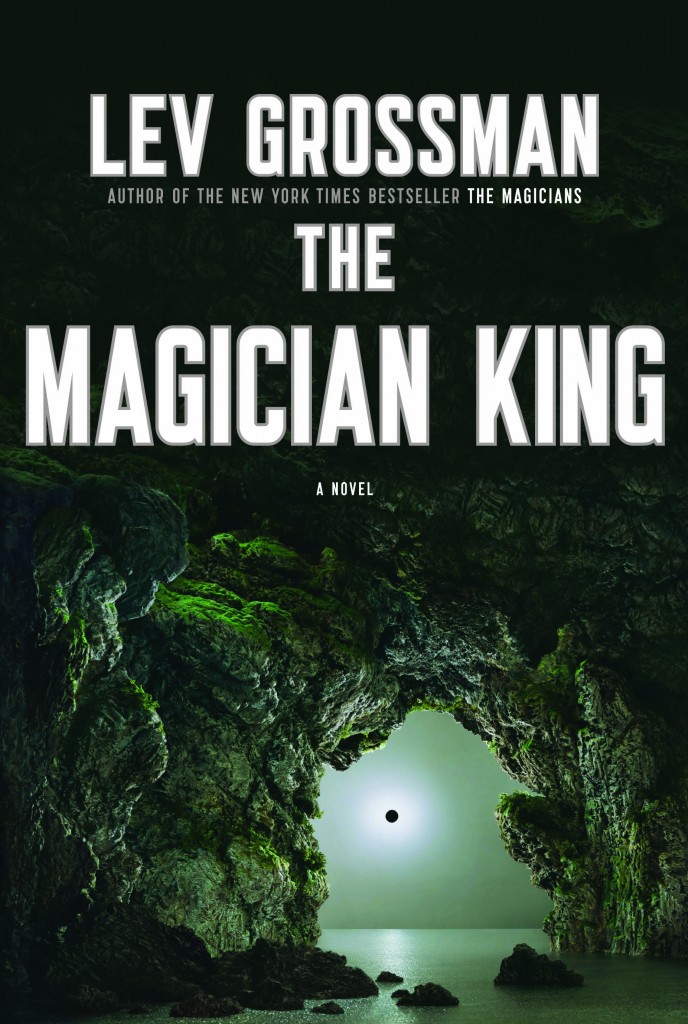
The Magician King is a novel penned by author Lev Grossman that follows after the events of The Magicians. Before I go any further, I want to point out two things: first, you may want to read my The Magicians review or our preview of The Magicians to help you recall the plot. Second? If you haven’t read the first book, I’m not certain you’ll enjoy this one as much, for reasons which I’ll get into shortly.
As I mentioned above, The Magician King takes place after the events of The Magicians. Because of that, fair warning: I feel there is no possible way I can write this review without spoiling something for someone… So be kind to the reviewer. Please.
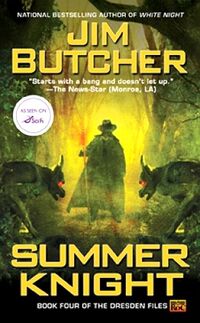
In Summer Knight, Harry is dealing with the after effects of Susan leaving. He spends day and night trying to find a cure for her vampirism. To no avail. Anger and depression are the mainstays of his life now. He doesn’t eat. He doesn’t bathe. He doesn’t see any of his friends, whom are really worried for him. Harry has isolated himself in a manner that is hardly healthy.
After meeting his friend Billy (and surviving both simultaneous attack from both a ghoul and a drive by shooting), Harry finds out that Billy has set up an appointment for him. Harry goes and meets the client, to find out that is is Mab, Queen of the Winter Court. She asks him to find out whom killed a man named Ronald Reuel. She also tells him that she now his purchased debt to Lenanasidhe, and she is willing to cancel the debt…after he does three favors for her. This is the first one and Harry really doesn’t have much of a choice. You do NOT say no, to the Queen of Air and Darkness, so therefore he is now the emissary for Winter.
Monsters: can’t live with them, and . . . well, it seems like there’s days where you’re spending all your time killing them. Particularly when it comes to horror gaming. If you’re not out staking vampires, you’re blasting zombies or shotgunning werewolves.
There are many table top RPGs that dip their toe into the horror genre with great aplomb. And when it comes to “regular people” (AKA Player Characters) taking up arms and blasting apart things that go bump in the night, three or four titles instantly come to mind. And one of those titles is GURPS–as if you didn’t know.
For the uninitiated, GURPS stands for “Generic Universal Role Playing System”, which is a fancy way of saying, if you can dream it up, you can play it using GURPS. First published in 1986, it came out at a time when nearly all RPG systems were tailored to a particular genre.
Steve Jackson has dominated the games industry lately with a seemingly endless supply of Munchkin-related games, accessories and knick-knacks. Just to prove there’s more going on at Jackson Labs than Munchkin, Steve Jackson Games released Zombie Dice last year to great acclaim. That acclaim is well-earned: Zombie Dice is fast, fun and addictive, and it’s cheap to boot.
Zombie Dice includes 13 dice, instructions, and a dice shaker/storage container in the package. The instructions are very simple: you (as the zombie) roll three dice at a time, and pick them out of the cup without looking at them. If a brain logo comes up, hooray! – you’ve successfully eaten some brains; set those aside.
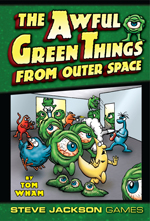
The crew of the exploration ship Znutar just wanted to cruise around the Galaxy, discovering strange new worlds and playing pool. But then their ship was invaded by the Awful Green Things . . . and suddenly they were fighting for their lives!
I recently had the chance to try this game. Amazingly, I had never even demoed the Awful Green Things From Outer Space before. I’d seen it sitting on the shelves of the local game store before and thought it looked like fun. Naturally, I played the role of the alien monsters the first time out, but both sides are just as fun in the end.
Before game play can begin, there’s a little set up involved in this primarily two-player (or two teams) game. First, the Znutar crew has to be placed into different locations on the ship. Then, players need to resolve the starting locations for the Awful Green Things, weapons, etc. Once you’ve played a few times, the set up will go fairly quickly. It took us about five or ten minutes to set up the game the first time we played.
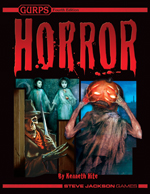
Luckily, I have had the pleasure of meeting Kenneth Hite, albeit briefly and in passing, at a convention only a short time ago. He was engaging, intelligent, and knowledgeable about things most people find horrific with a particularly keen interest in Lovecraft. I could think of few other game designers and authors better suited to write a game of horror. Even though I found myself quite daunted at the thought of reviewing a Steve Jackson Games product, I was not disappointed and from the first few lines my attention was transfixed while my mind whirled with the possibilities of my own fear-filled campaigns.
GURPS Horror, which I will simply shorten to G:H, begins with a history of the game, a small dose of the authors quite note-worthy credentials, and a short piece on what exactly ‘horror’ and horror role-playing is. After a brief explanation on why players need to remain mindful of their fears, G:H jumps into character creation. Going beyond simple numbers or hastily jotted notes, Hite actually seems to endorse players giving quite a bit of thought about their characters backgrounds.
Again, I am trying not to spoil too much. But some things have to be said.
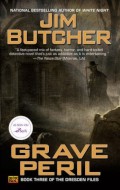
Grave Peril starts with a new character. Michael Carpenter, Knight of the Cross. For some reason the ghosts of Chicago have been going crazy for the last few weeks, and Harry and Michael have been running all over the place trying stop them. Michael is a great addition to this serious, because he brings a character that faith driven. Oh, and he has the holy sword Amoracchius, which was created by one of the nails that was used to crucify Jesus. Awesome.
Combined with plots dealing with Harry’s fairy godmother (Leanansidhe of the Winter Court of Fae), and ramifications of his actions in Storm Front with a Red Court Vampire named Bianca…this is the book that starts to move the serious toward being a great one. Harry and Murphy’s relationship was better after Fool Moon. Still not great, but better. Even to the point where with a few other CPD members, they took down a seriously twisted sorcerer named Leonid Kravos. So things are better.

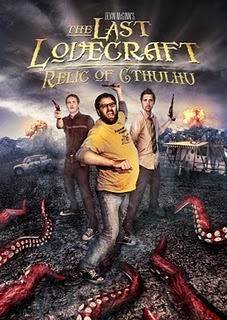 I just had the chance to watch The Last Lovecraft: The Relic of Cthulhu and I was impressed! For an independent film (one that has also won a couple of awards, I might add) this is an awesome film. What’s it about you ask?

 Midnight at the Spanish Gardens is not the kind of book I normally review for Flames Rising. It is certainly a fantasy novel, but the fantasy elements don’t actually end up being all that important: the book revolves around the choices that people make in their lives, and what they might do differently if they had it to do all over again — or if fate or chance had played out the events differently. But while it’s not truly a dark fantasy, I wanted to review it here after reading an ARC from the author because this is the type of book that held me and didn’t let me go. I actually stood in a doorway the first night I was reading it, intending to walk somewhere to put it down, expecting to head off to bed for the night, but I flipped page after page in my nook and kept reading, standing there, for probably twenty minutes. Then, realizing I clearly wasn’t going to stop, I gave up my rational decision to head to bed and sat down and read more instead. Not only that, but even when I wasn’t reading the book, I was thinking about it. That experience tells me that this is a book worth sharing.
 If you follow Jim Hines’s blog, you know he’s been experimenting with electronically self-publishing short stories, many of which originally appeared in print publications. His first collection, Goblin Tales, did well enough that he’s releasing another group of six tales, Kitemaster and Other Stories, in mid-August. I caught Jim’s note for reviewers and volunteered, and I think this is another strong group of stories, mostly for the lighthearted fantasy crowd. Three of them I’d previously purchased via fictionwise, and have been favorites of mine since the first reading, but three were brand new to me, and I think all are solid stories — even the one that left me with something akin to the willies over a series of puppet deaths. But we’ll get there in a minute.

 Hot off the presses, Ghost Story is the 13th installment in the Dresden Files series by Jim Butcher. At this point in the series, I would like to point out that if you haven’t read Changes or some of the earlier books, then this review will likely contain ***spoilers***. Be kind to the reviewer, folks.