Want to read a horror review before you buy? Read over 225 full-length reviews of books, games, DVDs, music and more from Flames Rising horror and dark fantasy!
The concept of a group of people investigating contemporary strangeness and paranormal events is not a new one, but this book provides a coherent and well-considered approach to what is going on that makes it worth investigating.
It begins with a short Introduction that provides the obligatory “what is role-playing?” explanation and describes the core premise of the game: that the characters are members of a society dedicated to hunting out the truth. It also states that the following four chapters can be read by players and game masters alike, while the rest is best left to the game master alone. As with any game in which there are secrets to unearth, it’s best not to know those secrets in advance if you are one of the people trying to unearth them… but it does presuppose that only one member of your group wishes to game master at least for this system.
Certain time periods are overused in RPGs. This game, which comes to us from Flying Mouse Games (thanks for the reviewer’s copy), actually works the opposite angle. We may see many takes on Queen Victoria’s reign; however, Queen Elizabeth’s tenure is a little bit more open to exploration.
The default setting for this RPG allows players to take on the roles of adventurers under the leadership of Queen Elizabeth and John Dee. That is the core to this book, its heart. This 234 page PDF offers a wealth beyond that singular idea.
In my Eclipse Phase review, I phrased the series of two-page overviews that were designed to give readers some quick insight into the game. OHMAS would have benefited from doing something similar.
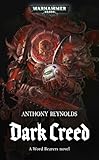
Dark Apostle is the third in the Word Bearers series and the culmination of a massive plot. Of course when you consider that the Word Bearers and other Traitor Legions are over 10,000 years old and their schemes stretch over millennia it’s hard to grasp the scope of such a “plot”. Wheels within wheels and the Word Bearers are plotters in the extreme.
The story of Dark Apostle Marduk continues and his goal of using the ancient Necron technology to essentially propel himself higher up the food chain and bring as much chaos to the Imperium as possible is fought with peril from within and without.
If you are already a fan of the Supernatural TV show and want to play out the kind of adventures that happen to its protagonists, this book will come as a real treat. If you don’t know the show, or are just looking for a game in which present-day heroes deal with supernatural menaces, this probably is not the game for you.
Written throughout in a casual style (almost as if written by Dean Winchester) and laid out in full colour with lots of (uncaptioned, alas, and rather dark) shots from the show as well as evocative collections of items that might rest on a hunter’s desk, the work begins with an Introduction by Sara Gamble, one of the show’s writers. Clearly, she’d quite like to join in, and it ought to get you into the right mood for this game from the outset.
It’s a familiar tale: enemy warriors fighting a desperate battle only to be snatched up and put through a grueling series of tests and implantations to become Astartes. Eventually they learn to be a team and work together (or die) as scouts, neophytes, etc. If you’ve read the Space Wolves Omnibus (specifically Space Wolf) by William King then you know the story. Honestly, if you’re a Space marine fan of any sort you likely are familiar with the story already. That’s all there is to know, right?
Author Jason Becker and artist Jon Rea have collaborated to create Killing Pickman, a modern noire tale wrapped around serial child murder and Satanism. And honestly, it warms my heart, but please keep that between you and me.
Issue 1 starts with Detective Bill Zsu canvassing the neighborhood in which multiple children have disappeared. When he knocks on Dick Pickman’s door the hairs stand up on the back of his neck. After calling for back up a showdown ensues the results of which are six new holes in Pickman, the discovery of satanic hobbies undertaken by the aforementioned Mr. Pickman, and a tunnel in which more child victims are discovered alive. Pickman goes to the hospital and Detective Zsu goes a little crazy working the psychopath beat. Little does he know that he’s only scratched the surface of the depravity he’s just uncovered.
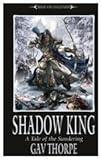
A few months back Gav wrote a post in his blog regarding cutting out “faffy” words. A lot of writers use a lot of excess language to get a point across where Gav tends to cut to the meat of the story and carves his way through the pages at a fevered clip.
The Shadow King is another great example of this. To be honest I was hesitant about whether Thorpe could pull that off. I mean…over 500 pages. That seems pretty wordy to me. So I sat down and set about consuming and digesting this thick tome (larger than anything he’s written to date I believe page-wise. Don’t quote me but I *think* that is accurate.)
As per usual Gav gets right to it. The stage is set and things start going to hell…fast. This is the second book of The Sundering, following Malekith.
Set in a New Orleans that never was, and certainly is not now, post-Katrina, this atmospheric work opens with a story that sums up the edgy infighting of vampiric unlife (provided you can read thin block capitals on a heavily-patterned background – better contrast would have improved my enjoyment of this bit!). The introduction following the story explains how New Orleans seems a city made for the gothic horror feel of Vampire: The Requiem, and explains how the material in the core rulebook perhaps represents common knowledge (and misinformation) about the city, while herein lies the real truth. Thus it is clear from the outset, that this book is intended mainly for Storytellers and not for general player consumption.
Who watched cartoons when they were growing up? Or still watches them, perhaps covertly, today? (You don’t need to answer that!) In the Foreword the point is made that not only are cartoons very entertaining for youngsters, they also provided a fertile inspiration for games on the playground… so why not for role-playing as well?
Channel 1: Introduction (to promote the TV show feeling, ‘chapters’ are called ‘channels’!) begins by attempting to define what sort of cartoons this game is intended to emulate – the 1980s action-adventure ones, which have been grouped together as ‘retro-toons.’ Now I’m a bit old to have been entranced by them (I graduated in 1980!), but certainly caught the odd episode and can see the appeal. Typified by boundless enthusiasm, violence that was brief and never seemed to draw blood (although robots came apart a lot) and no difficulty whatsoever in distinguishing between the Good Guys and the Bad ‘Uns, the sheer innocence and capacity for boundless fun is at the center of their appeal.
Writer/director/producer Christian Petersen’s Midnight Chronicles is an indie film based on the fantasy role playing game Midnight from Fantasy Flight Games. Evil rules in Midnight’s world of Aryth after Izrador, the dark god defeated the free races in a war 100 years prior. Men are now enslaved while Elves and Dwarves have disappeared into the forests and mountains. Hope resides in only the few brave enough to pursue it. As Mag Kiln travels to Blackweir to investigate the disappearance of a fellow priest, others also descend on the small town where a complex web of good versus evil develops that has implications on the future of the dark forces that rule the land.
The television show Supernatural may not be a holy experience for me; however, I hold it in high regards. While critics may pan its “model factor,” I hold that it’s one of television’s brightest shows about darkness. Being one of my favorite shows, I was ecstatic when the corebook was released. While it took awhile for that to happen, Supernatural Adventures followed in a timely fashion. A book of adventures proves to be a tall order for me. I like running my games, not the games somebody else created. Also, I love the series and find myself inspired by it regularly. These two factors play a huge role in my review for this book.
Let’s start with Digger Hayes graphic design. I think Hayes approach to the Supernatural line is the only approach to it. Just about all the hunters we see from the show seem to be a disorganized, messy lot.
In his introduction to “Michael H. Hanson’s Sha’Daa: Tales of the Apocalypse” author Mike Resnick sates that is “not quite a round-robin novel by its many authors, but is somehow more than an anthology.”
That statement is an accurate one. This book has a total of ten separate stories, and ten additional short “interludes” between each story written by Michael H. Hanson. Hanson wrote one of the ten stories, as did editor Edward McKeown. The remaining eight stories are written by eight separate authors. Each story is connected, however, by one over-arching theme and one or more re-occurring characters.
Honed by years of experience with the D20 ruleset, Fantasy Craft opens with the clear premise: this is YOUR game, and the rules are but the toolset to enable you to run it how you like. That said, the Introduction continues with the usual information about what role-playing is, definitions of players, characters, the game master and the like… but throughout the point is continually stressed that you will be choosing the precise nature of the world in which your game will run, from a range of time periods to the relative levels of technology and magic.
For a long time, Joe Pitt has been on the receiving end of the whip-as stick, and you might be wondering if he gets to turn it around in this, the final book of the Joe Pitt Casebooks series. I can tell you definitively and without a doubt that everyone gets what’s coming to them. And I do mean everyone.
Let’s be honest. Joe Pitt isn’t exactly what you’d call a hero; hasn’t been for the last several books. The darkness has been closing around him for a long time. The thing about darkness, though, is that it’s not always bad. Oppressors can be fled. Justice can be served.
Hey pals & gals, let me ask you something. Have you ever read a collection of short stories where the title suggests a particular genre, but it turned out to be all over the place? Have you ever picked up the same sort of book and basically misinterpreted what the title was even referring to? I ask only because if this has happened to you, you’ll find familiar territory with The Apex Book of World SF. But if you haven’t, then this collection won’t just break that particular piece of ice, it will shatter it!
When I got a reviewer copy of this book, I wasn’t entirely sure if I could give it a proper review. I’m really only a sorta-kinda-maybe Sci-Fi fan at best. I mean, I get the point of the genre and I’ve enjoyed some awesome Sci-Fi tales in my life, but my first love is Horror whom is followed by my favored mistress Dark Fantasy. But never the less, since I was entrusted to review this bad boy, I e-cracked open my shiny new e-book and read away.
I’m surprised it took this long. I know there have been flirtations between Dungeons & Dragons and Call of Cthulhu in the past; however, the affair is now fully public. Two of the biggest games in the market now have a serious connection. This book offers nearly fifty pages of how to bring Lovecraft’s creations into your beloved fantasy game. It’s essentially a small book of monsters. It’s just happens to be a damn good book of monsters.
Erik Nowak’s graphic design and layout catches the reader’s attention towards exactly what you need. Stats are blocked out differently than the flavor text. Bold fonts and borders keep the reader wrangled into the material.
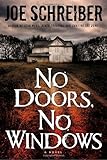
No Door, No Windows by Joe Schreiber is, at its heart, a haunted house story; although it might be more accurate to say it is a haunted character story.
The novel is filled with characters who cannot escape their pasts, or their present, which means that their futures may be in jeopardy. Schreiber’s characters are haunted by guilt, regret, and emotional inertia as much as they are by supernatural forces. Schreiber wields both realistic and otherworldly horrors with deft and subtlety in this suspenseful novel. The plot is centered on Scott Mast, a professional greeting-card writer living in Seattle who is forced to return to his native small-town in New Hampshire for his father’s funeral.
Say what you will about the Savage Worlds setting, but I find it possesses one of the more engaging mass combat systems. I’ve been guilty of not using it to its highest potential in some of my campaigns; however, that’s another story altogether. Blood of the Innocent links directly to the Tour of Darkness (‘Nam setting) for Savage Worlds(though only the core book is required to play this adventure).
This deadly little jungle romp comes in two flavors, which are “War is Hell” and “Life is Good.”
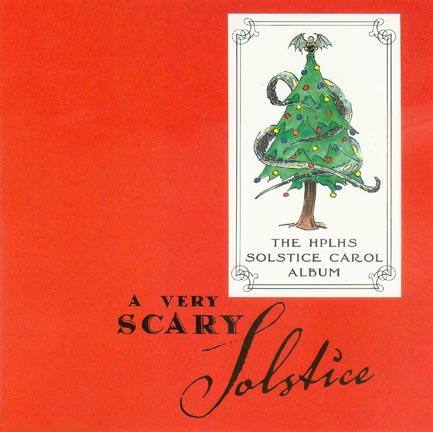
Many people try to find some solace in seasonal music at this festive yet emotionally draining time of year. After years of hearing the same classic carols — or more recent covers with no soul and even less imagination — if you’re like me you’re looking for something a little different to inspire the holiday spirit. A Very Scary Solstice by the H.P. Lovecraft Historical Society fills the bill nicely, with 25 Mythos-inspired takes on classic Holiday songs.
Warning: If you are particularly sensitive about the sanctity of holiday traditions, or if your sense of humor has rather rigid and narrowly-defined limits, stay away from this album. My largely abandoned Catholic upbringing suggests that these songs border on the blasphemous, despite their obvious playfulness and good humor.
November 2009 has seen the release of one of the most well thought out and put together magazines for Sci-fi and Fantasy Wargaming ever. ‘The Ancible’ is the dream and creation of Kenny Robb, Managing Director of the magazine. At first glance the cover alone is enough to inspire purchase with a magnificent painted miniature by Adrian Walters. The magazine, from the time you open it to the last page, is a visual masterpiece designed with thought, purpose and function. Phil Cunningham is the man to thank for that. This is not a magazine designed by beginners or ‘fly by night’ fans. Every article and piece of artwork is well thought out and placed for visual appeasement. The usual overabundance of retail advertisements and promotional material is not present; having just enough to wet the consumers’ appetite.

 The concept of a group of people investigating contemporary strangeness and paranormal events is not a new one, but this book provides a coherent and well-considered approach to what is going on that makes it worth investigating.